The periorbital area is the area around the eyes, consisting of the upper and lower eyelids, the lacrimal apparatus, the palpebral fissure, and the conjunctival sac. This area is one of the most delicate and complex areas of the face, requiring particularly careful and professional care.
Features of the skin around the eyes
The skin around the eyes is one of the first to reveal our age. It is here that the first signs of aging, the effects of stress or the consequences of an unhealthy lifestyle appear in the form of fine wrinkles, puffiness, pigmentation or dark circles under the eyes. This is due primarily to the specific anatomy and physiology of the skin in this area:
Thickness and structure of the skin of the periorbital area
- The skin around the eyes is much thinner than on other parts of the face: on average it is only 0.33-0.36 mm, while in other areas – 1-2 mm. And in some cases, even greater thinning of the skin around the eyes is possible – due to the constitutional features of the body.
- The dermis of the periorbital zone is characterized by a thin network of collagen and elastic fibers, which is more prone to fragmentation and loss of elasticity under the influence of aging factors.
- The periorbital zone is practically devoid of subcutaneous fat, has a limited number of sebaceous glands and is characterized by a high density of the capillary network. This makes it extremely vulnerable to negative external and internal factors.
Vascular and lymphatic system
- The periorbital area has a developed capillary network, which is located directly under the thin epidermis. Therefore, the skin in this area is particularly transparent. Increased visibility of vascular structures contributes to the appearance of dark circles and spider veins.
- A feature of the periorbital area is poor lymphatic drainage due to the small number and specific location of lymphatic vessels. This contributes to the development of congestion, swelling and “bags” under the eyes, especially if the sleep pattern or water balance of the body is disturbed.
Muscle structures
The main muscle of the periorbital zone is the orbicularis oculi muscle, which is responsible for blinking, closing the eyelids, facial expressions and expressing emotions. During the waking period, the facial load on this area is very high, which causes increased mechanical stress on the skin. Intensive work of the orbicularis oculi muscle causes the formation of facial wrinkles (“crow’s feet”) and deep static changes with age. Hypertonicity of this muscle with age leads to the “sinking” of the eye inward, the reduction and rounding of the eye incision, and the skin of the upper eyelid hangs down, folds. The skin of the lower eyelid becomes wrinkled (if it is tightly adjacent to the orbicularis oculi muscle) or hangs in bags (with frequent swelling or the constant presence of excess fluid between the skin of the eyelids and muscles due to poor lymphatic drainage).
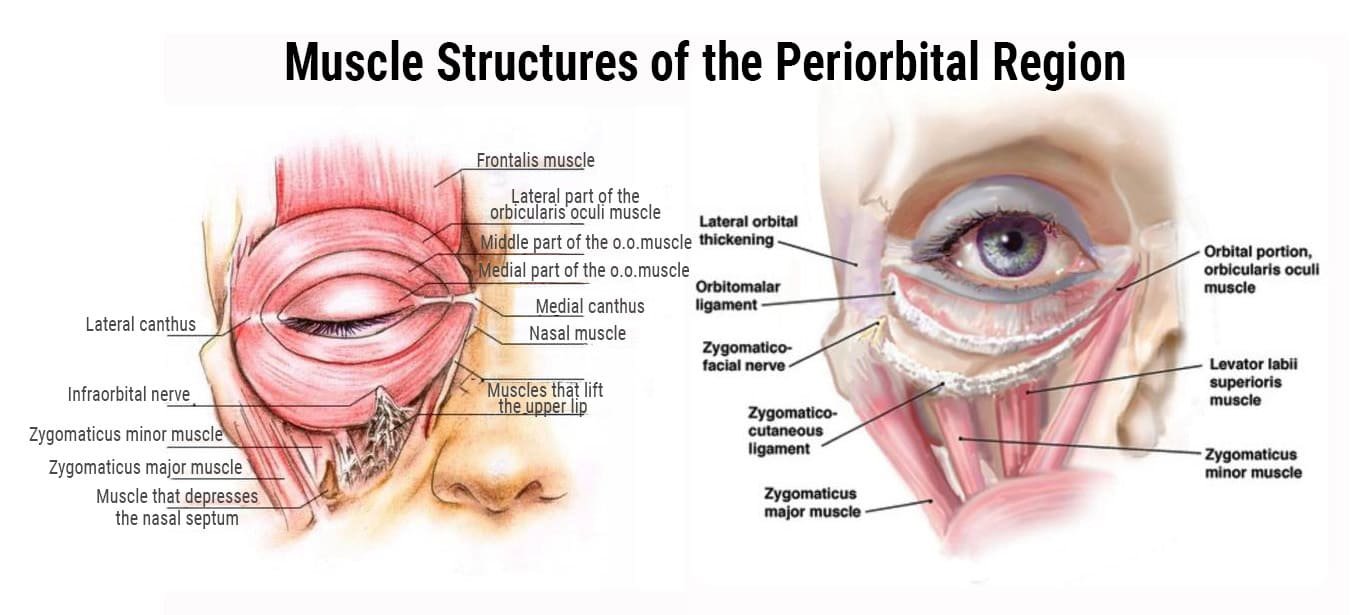
The upper eyelid is raised by the levator palpebrae superioris muscle, the dysfunction of which leads to ptosis of the upper eyelid.
It is also important to remember that the facial muscular system is a single biomechanical structure, and the deformation of one muscle always affects the others and the entire system as a whole. That is, the visual “sunken” of the eye is affected not only by atrophy of the circular muscle, but also by shortening of the masseter muscle (which also contributes to the appearance of oblique wrinkles near the eye), changes in the wing of the nose (pinch, overgrowth of cartilage and fatty tissue, formation of a bulge).
Features of the innervation of the periorbital zone
- The skin around the eyes is innervated mainly by branches of the trigeminal nerve (n. trigeminus), which makes this area extremely sensitive to tactile and pain stimuli. The high density of nerve endings causes a rapid reaction to mechanical and temperature influences, which can cause discomfort or irritation if care is not taken properly.
Thus, the physiological characteristics of the periorbital zone determine the need for a careful, professional, and individual approach to the selection of cosmetic procedures and care products.
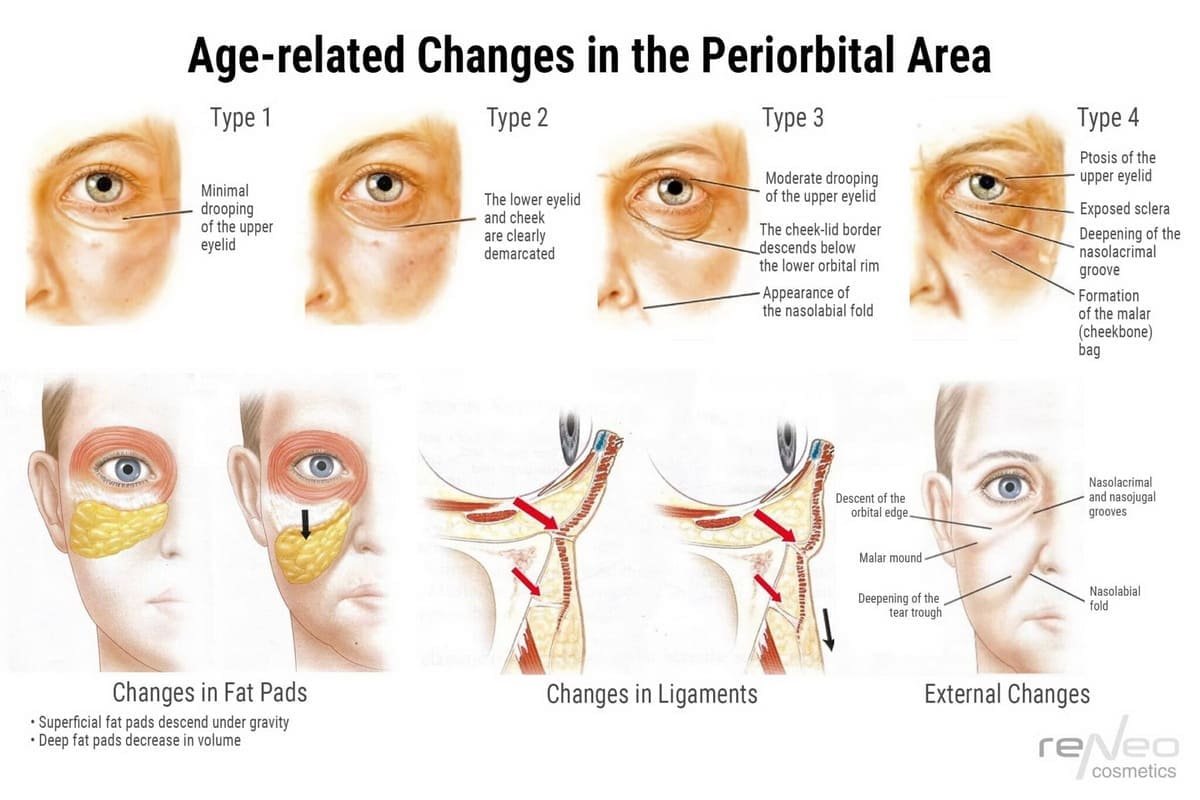
Aesthetic problems of the periorbital region: classification and causes of occurrence
In addition to anatomical and physiological features, the condition of the periorbital zone is significantly influenced by external and internal factors:
- Chronic fatigue and lack of sleep
- Stress
- Active facial expressions, the habit of squinting, rubbing the eyes
- Improper nutrition and bad habits
- Presence of diseases, allergic reactions
- Climatic factors
- Time in front of gadget screens (load on the muscles of the orbital zone + exposure to blue light)
- Absent or incorrectly selected skin care
All these factors contribute to the deterioration of the firmness and elasticity of the skin around the eyes, accelerating the appearance of age-related changes and other aesthetic problems. Let’s consider in more detail the main problems of the periorbital zone and their etiology.
Pigmentation of the periorbital area
Pigmentation manifests itself in the form of dark circles or localized age spots. These dark spots create the appearance of tired skin around the eyes.
The main causes of dark spots around the eyes are:
- Periorbital hyperpigmentation — is associated with the accumulation of melanin, which may have genetic or ethnic causes. It is often observed in people with darker skin phototypes (Fitzpatrick IV-VI). Such hyperpigmentation can also be caused by hormonal problems in women, or excessive exposure to UV radiation. Dark circles around the eyes caused by pigmentation usually have a brown or yellowish tint.
- Pigmentation caused by vascular disorders — occurs due to blood stasis, the vascular network showing through thin skin. Dilated veins around the eye muscles create a characteristic blue color. This can be caused by fatigue, dehydration, vegetative-vascular dystonia, genetic characteristics, etc.
- Post-inflammatory hyperpigmentation — can appear after dermatological diseases, allergic reactions or improperly selected cosmetics.
- Anatomical features – deep-set eyes, due to which the refraction of light creates a visual darkening of the periorbital area.
So, answering the frequent question “how to remove dark circles under the eyes?”, one should consider the cause of the dark circles in a given patient.
Swellings and congestion
Swelling (“bags”) under the eyes is the result of fluid accumulation and impaired lymphatic drainage. The main causes of this include:
- Disruption of lymphatic drainage due to poorly developed lymphatic network around the eyes, impaired drainage function of the orbicularis oculi muscle.
- Excessive consumption of salt, alcohol, sleep disorders, which cause fluid retention in the body.
- Anatomical features and changes (lower eyelid herniation, age-related weakening of the orbital septum, structure of the nasolacrimal ligament).
- Systemic diseases (endocrine disorders, chronic renal failure, cardiovascular diseases).

Periorbital wrinkles
Wrinkles around the eyes can be divided into:
- Mimic wrinkles (“crow’s feet”), which are formed due to the active work of the orbicularis oculi muscle.
- Static wrinkles, associated with a decrease in the synthesis of collagen and elastin, degradation of the connective tissue of the dermis and dermal matrix with age or due to photoaging. The delicate thin skin around the eyes, losing its own hyaluronic acid, collagen and elastin, becomes dry and weak, which is why wrinkles appear.
The main factors contributing to the formation of wrinkles:
- chronic exposure to ultraviolet radiation;
- decreased estrogen levels (especially during menopause);
- active smoking;
- deficiency of antioxidants in the diet.
Dryness and peeling of the skin
Dry skin around the eyes is not only visible on the outside, but also causes discomfort. In addition to the feeling of tightness and peeling, itching and irritation of the skin in the periorbital area are also possible. Among the most common causes of dry skin around the eyes, it is worth noting:
- Improper care: failure to follow hygiene rules, leaving makeup on overnight, frequent use of aggressive cleansers, use of inappropriate creams or masks in this area.
- Allergic reactions are one of the most common causes of peeling and inflammation of the skin around the eyes. Local skin reactions can be caused by various allergens: pollen, animal hair, dust, food, household chemicals, decorative and care cosmetics.
- Skin and inflammatory diseases – contact or atopic dermatitis, blepharitis, conjunctivitis, etc.
- Weather and climatic conditions – disruption of the skin’s lipid barrier under the influence of wind, UV rays, low temperatures; overdried indoor air due to central heating or air conditioning.
- Eyelash mites – they settle between hair follicles and feed on keratinized skin particles, sebum and other secretions. This leads to irritation and itching of the surrounding skin.
- Vitamin deficiency, in particular vitamin A, E, and B vitamins.
- Age-related changes – With age, the production of natural moisturizing factors (NMF), lipids, and hyaluronic acid decreases, which increases skin dryness and provokes peeling.
To successfully solve the problem of dryness and peeling of the periorbital area, it is necessary to use delicate cleansers and moisturizers, restore the skin’s lipid barrier, and select hypoallergenic care taking into account the individual characteristics of the patient.
Decreased tone and elasticity, tissue ptosis
Decreased tone is manifested by drooping of the upper eyelid (ptosis), as well as loss of clarity of the contours of the lower eyelid. The main reasons:
- Weakening of collagen and elastin fibers with age, leading to loss of skin firmness and elasticity.
- Deterioration of the functional state of the orbicularis muscle and the muscle that lifts the upper eyelid (levator palpebrae superioris).
- Reduction in the volume of adipose tissue and restructuring of the deep structures of the periorbital area with age.
- Decreased turgor of the soft tissues of the frontal and temporal areas
Anatomical features and genetic factors
Genetic predisposition often determines the appearance of problems such as dark circles, early wrinkle formation and pigmentation. Thus, anatomically pronounced tear troughs, thin transparent skin and genetically determined increased melanin deposition are factors that complicate correction and require a special approach.
Periorbital area care with professional procedures in a cosmetologist’s office
For targeted correction of the periorbital zone, today there are many methods in the arsenal of a cosmetologist – from peels and mesotherapy to laser rejuvenation and contouring. Of course, the peculiarities of this zone impose certain limitations.
At the same time, the skin around the eyes should be paid attention not only within the framework of a separate procedure, but in each facial care procedure. We will consider this aspect in more detail.
Peels
While working with superficial chemical peels in the eye area, preference should be given to light peels, AHA acids, gel textures. Be sure to follow safety precautions – do not come close to the ciliary edge to prevent the peel from getting on the mucous membrane of the eye, thoroughly but carefully neutralize without excessive friction, always moisturize after the procedure. For example, Peel-Expert Light gives an instant effect, improves the physiological condition of the skin, does not cause peeling, has no rehabilitation period. This peel can be used for the most sensitive and thin skin, including in the eye area – without discomfort, only a slight tingling is possible.
Device-based techniques
Electroporation, microcurrent therapy, etc. provide a complex effect with simultaneous effects on muscle tissue, epidermis, circulatory and lymphatic systems. They give excellent results for smoothing facial wrinkles, eliminating bags and dark circles around the eyes. While working with devices in the periorbital area, it is important to exercise special caution:
- use safe products approved by ophthalmologists,
- do not get too close to the ciliary edge
- use special nozzles for the skin around the eyes. For example, while working with microneedling (dermapen) – use nozzles with a minimum depth of penetration to avoid irritation and damage to the delicate skin of this area.
Care procedures
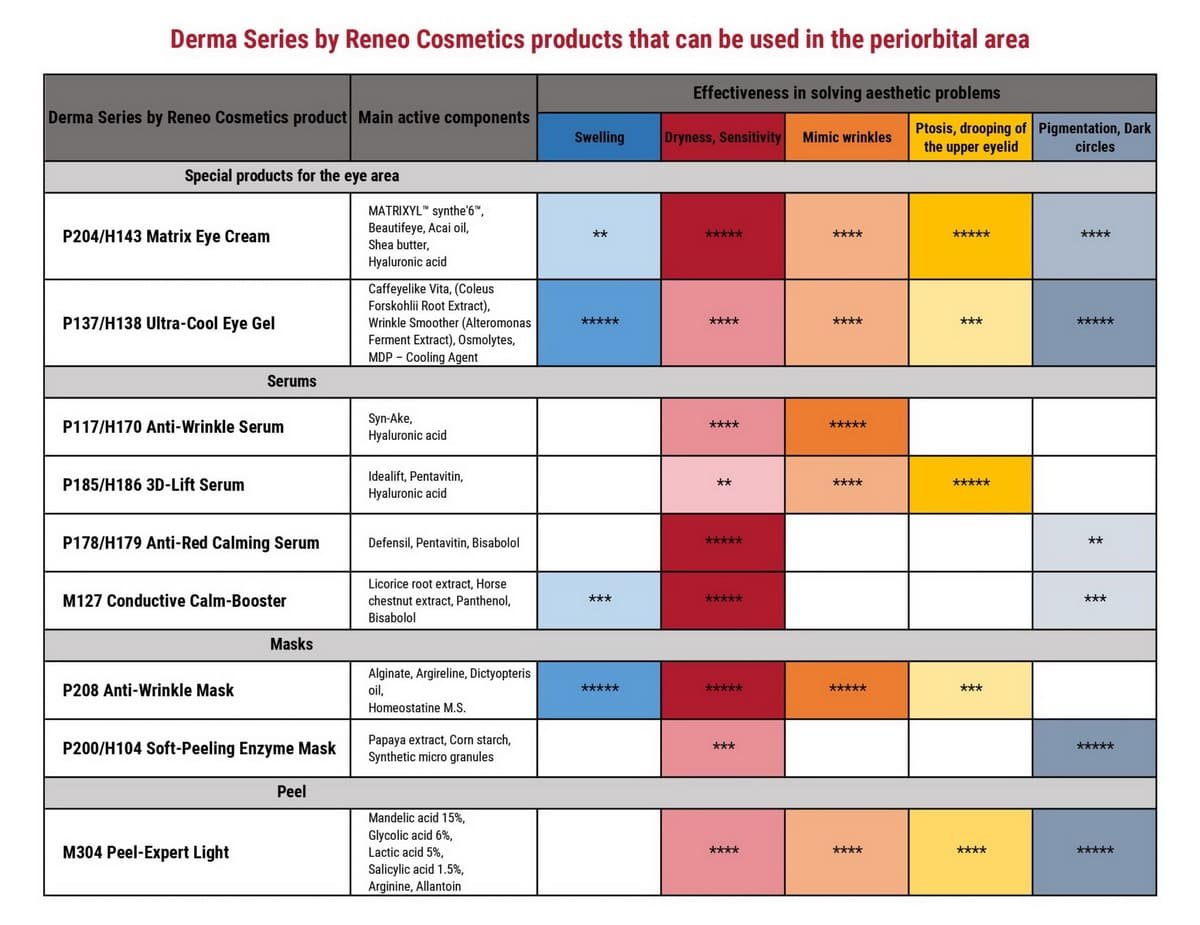
Applying a product for the periorbital area is an important stage of every therapeutic facial care. In the Derma Series by Reneo Cosmetics treatment protocols, this is the seventh stage: after the active mask and additional targeted serum before the final cream.
For a more intense lifting and moisturizing effect in this area, it is recommended to cover the eye area with cotton pads moistened with Calming Tonic during the exposure of the alginate mask. In addition, the Anti-Wrinkle Mask can be used directly for comprehensive care of the orbital area, to eliminate swelling and fill fine radial wrinkles. Due to the presence of argireline, the Homeostatine MS complex, and Dictyopteris brown algae oil, the mask provides a triple effect for the correction of facial wrinkles: smoothing, filling, lifting.
At the beginning of the procedure, at the deep cleansing stage, the Soft-Peeling Enzyme Mask can and should also be applied to the periorbital area. The soft, creamy texture of the mask is suitable for the most sensitive skin, and the action of enzymes (papain) provides delicate cleansing and an instant brightening effect.
Active ingredients for eye care
The effectiveness of cosmetics and procedures for the skin around the eyes largely depends on the correctly selected active ingredients. Most often, in professional cosmetology and dermatology, antioxidants, peptides, hyaluronic acid, caffeine, ceramides and phospholipids, AHA acids, retinoids are used to care for the periorbital area.
Each active ingredient affects a specific aesthetic problem of the periorbital area, or solves several aspects at once. Products for daily care of the skin around the eyes should have a balanced composition and provide a comprehensive effect.
Let’s consider in more detail the active ingredients according to the main problems of the skin around the eyes
- Moisturizing, regeneration, lipid barrier restoration: hyaluronic acid (in low molecular weight form), pentavitin (moisturizing complex based on natural carbohydrates), osmolytes, betaine, shea butter
- Strengthening lymphatic drainage and eliminating swelling: caffeine and its modern alternatives (Caffeyelike Vita), cooling components (e.g. MDP (Methyl diisopropyl propionamide), Acai oil, seaweed extracts, Beautifeye biotechnological complex.
- Anti-wrinkle / anti-aging effect: acai oil, hyaluronic acid, peptides (Matrixyl® Synthe’6, Argireline (Acetyl-Hexapeptide-8), SYN-AKE, biotechnological complexes (Wrinkle Smoother, Homeostatine™ M.S.), retinoids
- Elimination of dark circles under the eyes: enzymes, AHA acids, antioxidants, retinoids; components are aimed at working with blood vessels or at densifying the dermis – depending on the cause of the appearance of dark circles.
Hyaluronic acid is one of the most common moisturizing ingredients due to its hygroscopicity. Because of its unique ability to bind and retain large volumes of water, hyaluronic acid plays a key role in maintaining skin hydration and elasticity.
While caring for the periorbital area, it is important to give preference to products with hyaluronic acid that has low molecular weight. It is able to penetrate into the deep layers of the epidermis, so it will have a more pronounced moisturizing and anti-aging effect, and stimulate collagen synthesis. In contrast, high molecular weight hyaluronic acid forms a moisturizing film on the surface of the skin, which in the area around the eyes will contribute to the appearance of swelling. In addition, products with hyaluronic acid in the periorbital area are best used in the morning or at least an hour before bedtime.
Features of home care for the skin around the eyes
Caring for the skin around the eyes at home involves:
Cleansing
Delicate cleansing of impurities and make-up. It is important to avoid constant use of aggressive cleansers and excessive rubbing of the skin around the eyes.
If you need to wash off intense, heavy make-up – first use a two-phase make-up remover or micellar water. After that, additionally cleanse the skin with Comfort Cleansing Mousse or Calming Milk, then tone the skin with Calming Tonic.
For a deeper cleansing and brightening effect, use the Soft-Peeling Enzyme Mask 1-2 times a week – on the entire face, including the skin around the eyes (apply the mask in a thick layer, after 10 minutes carefully rinse with warm water and tone the skin).
Intensive hydration and nourishment of the epidermis
Considering the anatomical and physiological features of the periorbital area, it is important to use special products for the skin around the eyes. Face creams, even with a light texture, will weigh down this area and can provoke swelling.
Additional specific care products
Problems around the patient’s eyes are often relevant for the entire face as a whole. Therefore, using a facial serum can emphasize the effect of the product for the periorbital area.
- Anti-Wrinkle Serum with muscle relaxing effect – moisturizes, smoothes mimic wrinkles
- Anti-Red Calming Serum against redness – for dry, irritated skin, for a soothing effect after allergic reactions
- 3D-Lift Serum – for intensive lifting, increasing skin elasticity and firmness, eliminating age-related changes and tissue ptosis.
- Conductive Calm-Booster – if there are visible vascular manifestations.
Home care for the skin around the eyes should be all-encompassing. In addition to the basic steps mentioned above, it is important to include special exercises to relieve tension, as well as a light massage of the eyelid skin. It is also very important to protect your eyes from ultraviolet radiation with sunglasses and apply SPF cream to the area around the eyes. And, of course, observing a sleep and rest regimen, reducing the impact of blue light by limiting the time spent in front of phone and computer screens.
Which texture is better for the periorbital area – gel or cream?
Choose the texture of the product for the eye area based on comfort and individual feelings. The most important thing is the composition of the product.
The best option:
- In the morning – Ultra-Cool Eye Gel – a light texture of gel patches that is quickly absorbed and does not require rinsing, is an excellent base for makeup. Provides comprehensive care and a pleasant feeling of light coolness.
- In the evening – Matrix Eye Cream – a gentle cream with peptides will help to tighten the thin skin around the eyes, eliminate visible signs of age-related changes, sagging of the upper eyelid.
When to use eye care products: in the morning or in the evening?
Applying a product for the skin around the eyes should be included in both the morning and evening routine. The main rule of evening care: use a gel or cream for the periorbital area at least before bedtime. This will reduce the risk of swelling, ensure deep penetration of active ingredients and avoid irritation.
If you apply a product for the skin around the eyes immediately before bedtime, it may not have time to be completely absorbed, and part of the product will remain on the surface of the skin. Remains of the cream or gel that get into the eyes during sleep can cause irritation, tearing or even an allergic reaction. During sleep, when lymph and blood circulation slow down, this increases the risk of fluid accumulation and the appearance of morning swelling under the eyes.
Important! Since the skin of the periorbital area is thin, the amount of cosmetic product applied should be appropriate, small. Excessive amounts of cream or gel around the eyes will not only reduce the durability of makeup, but also weigh down the skin, and it can provoke swelling or irritation.
Thus, understanding the key causes and mechanisms of periorbital problems allows specialists to build effective care and correction strategies, as well as prevent the development of complications in their clients.
- Roh, M., Chung, S., & Chung, Y. (2020). Periorbital rejuvenation: A review of dermatological treatments. Dermatologic Therapy, 33(6), e13920.
- Farkas, K., & Schorsch, F. (2019). Skin structure and physiology of the periorbital region. In: Cosmetic Dermatology, Springer, pp. 67–73.
- Jiang, H., Qu, Y., & Liu, J. (2021). Dark circles and periorbital hyperpigmentation: A comprehensive review. Clinical, Cosmetic and Investigational Dermatology, 14, 1209–1224.
- Pilkington, S. J., Belden, S., Miller, R. A., & Debevec, J. (2015). Periorbital edema: A systematic review. Journal of Clinical and Aesthe